


 08045478385
 Send Inquiry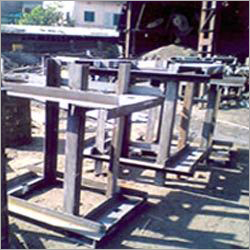
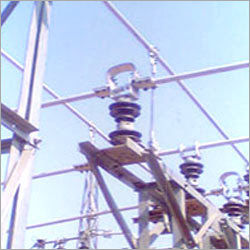
Substation Structure
Product Details:
- Product Type Substation Structure
- Material Mild Steel / Structural Steel
- Welding Standard IS 9595 / AWS D1.1
- Capacity Customized
- Application Electrical Power Transmission & Distribution
- Galvanization Standard IS 2629 / ASTM A123
- Out Coating Hot Dip Galvanized
- Click to View more
X
Substation Structure Price And Quantity
- 10 Piece
Substation Structure Product Specifications
- IS 2062 / ASTM A36 / Custom
- Hot Dip Galvanization
- Silver (Galvanized)
- Mild Steel / Structural Steel
- Angular / Tubular / Custom
- 3 mm to 12 mm
- As per specification (6m to 40m)
- Up to 765 kV
- Substation Structure
- IS 2629 / ASTM A123
- Electrical Power Transmission & Distribution
- Hot Dip Galvanized
- Customized
- IS 9595 / AWS D1.1
Substation Structure Trade Information
- 1000 Piece Per Month
- 7 Days
Product Description
We are a renowned name engaged in offering services for Substation Structure that is highly demanded in various industries like telecom, automobile and other. In order to render these services, our professionals use high quality raw materials and modern technology. Our professionals work in close synchronization with the clients to figure out their exact needs. The offered services for Substation Structure are highly appreciated for their timely execution, professional approach, flexibility and hassle free management.
Features of Sub-Station Structures :-
- Hot Dip Galvanized
- Easy to Assemble
- Withstand Chemicals & Heat
- Nice Appearance
- Long Service Life
- Outstanding Weather Resistance
- Different Types of Power Substation
Product details
|
Transformer Type |
Power Transformer |
|
Phase |
Single Phase |
|
Transformer Power |
11 KVA - 33 KVA |
|
Application |
Substation structure |
|
Grade |
Steel |
|
Insulation Material |
PVC |
Superior Corrosion Resistance
Featuring hot dip galvanization conforming to IS 2629 or ASTM A123, our substation structures offer long-lasting protection against corrosion and harsh weather. The rigorous galvanization process ensures that each component retains structural integrity, minimizing maintenance and enhancing service life in demanding environments.
Versatility and Customization
We offer an array of design options, including angular, tubular, and fully custom shapes, all available in a variety of thicknesses. Tailored heights (6m to 40m) and compliance with numerous international standards ensure that every structure fits your projects exact requirements.
Reliable for High-Voltage Applications
Engineered to handle voltages up to 765 kV, our structures are ideal for the backbone of power transmission and distribution networks. Each product undergoes strict quality control and welding processes to guarantee stability, durability, and operational safety in high-voltage settings.
FAQs of Substation Structure:
Q: How are substation structures manufactured and coated for protection?
A: Substation structures are fabricated from mild or structural steel before undergoing a hot dip galvanization process, following IS 2629 or ASTM A123 standards. This protective coating delivers a robust silver finish that guards against rust and corrosion, enhancing durability in outdoor applications.Q: What customization options are available for these substation structures?
A: We provide extensive customization in shape (angular, tubular, or bespoke designs), thickness (3 mm to 12 mm), height (6m to 40m), galvanization standards, and more. This flexibility allows us to meet specific project requirements for electrical power transmission and distribution.Q: When should hot dip galvanized substation structures be used?
A: Hot dip galvanized substation structures are recommended for installations exposed to outdoor environments, where enhanced corrosion resistance and long-term structural stability are critical. These are ideal for power transmission and distribution facilities, especially those in challenging weather conditions.Q: Where are these substation structures typically installed?
A: These structures are primarily deployed at electrical substations involved in power transmission and distribution networks, supporting equipment such as transformers, circuit breakers, and busbars across a variety of terrains and geographic locations.Q: What is the process involved in ensuring welding quality for these structures?
A: All welding is performed following IS 9595 or AWS D1.1 standards. Skilled professionals utilize precision techniques and rigorous testing to ensure each welded joint meets stringent safety and strength requirements, crucial for high-voltage applications.Q: How does galvanization benefit substation structure performance?
A: Galvanization provides a continuous, adherent coating that protects the steel from moisture, chemicals, and environmental stressors. This results in a significantly extended lifespan, reduced maintenance, and improved safety performance over uncoated structures.Tell us about your requirement

Price:
Quantity
Select Unit
- 50
- 100
- 200
- 250
- 500
- 1000+
Additional detail
Mobile number
Email

Other Products in 'Transmission Line Hardwares' category

Sanjay Casting & Engineering Company
Works Address:
114, Makardah Road,Kadamtala, Howrah - 711 101
Administrative Address:
33B, Ezra Street,Gr. Flr. Kolkata - 700 001
24/7
Contact Details

- B No J.L. No.50, Kantlia Industrial Complex, Kantlia,Howrah - 711101, West Bengal, India
- Phone :08045478385

- Mr Bishnu Kumar Kedia (Director-Sales)
- Mobile :08045478385
- Send Inquiry
 Send Inquiry
 Send Inquiry
 Send SMS
 Call Me Free
|


SANJAY CASTING & ENGINEERING COMPANY
All Rights Reserved.(Terms of Use)
Developed and Managed by Infocom Network Private Limited.
Developed and Managed by Infocom Network Private Limited.

